

How to Choose a POP Display Manufacturer | Sourcing Guide for Retail POP Trays

Alex brings 19 years of specialized experience in heavy-gauge thermoforming. As a core technical expert, he has guided numerous international clients through complex development cycles—from DFM analysis and material selection (PC, ABS, PMMA, etc.) to 5-axis CNC execution. His dedication to engineering precision and hands-on support has successfully brought countless global custom projects from CAD drawings to flawless market execution.
Wondering how to choose a POP display manufacturer? Our sourcing checklist covers specialization, MOQ, lead time, QC, sustainability & red flags for custom silk-screened thermoformed POP trays and retail fixtures.
Match Their Specialization to Your POP Format
POP manufacturers tend to specialise in specific materials: corrugated cardboard, thermoformed plastic, metal, wood, acrylic or mixed-material builds. If you need custom silk-screened thermoformed POP trays, a corrugated print shop lacks the plastic forming, CNC trimming and screen printing know-how.
Key question: What POP formats have you produced in the last 12 months? Can you share matching samples and case studies?
Red flag: Vendors claiming “we can make everything” but with no relevant recent project examples. They will learn on your project.
Clarify MOQ, Setup Costs & Pricing
Minimum order quantities are determined by tooling, mould and screen printing setup fees. Many factories offer flexible MOQs for first-time pilot orders to build a long-term partnership. Always lock MOQ and unit pricing in writing. Avoid suppliers who quote low upfront prices then raise costs after you commit.
Key question: What is your MOQ? Can we adjust it for our first project? Is pricing fixed once approved?
Confirm Realistic Lead Times
Lead time reflects factory capacity management. Standard corrugated POP takes 3–5 weeks post sample approval. Custom thermoformed POP trays with silk-screened logos generally require 6–12 weeks. Extremely fast lead times (1–2 weeks) often point to undisclosed subcontracting. Constantly shifting delivery dates are another warning sign.
Key question: What is your guaranteed lead time after sample sign-off? What risks may delay production?
Check Production Location & Subcontracting Rules
POP fixtures and trays are bulky and heavy, so shipping greatly impacts cost and schedule. Regional manufacturing works best for short-run promotional POP. Offshore Asian production only makes sense for large-volume permanent runs where tooling can be amortised over many units.
Key question: Where are our POP trays manufactured? Will any production steps be outsourced?
Ask for DFM Engineering Support
A good POP supplier provides Design for Manufacturability (DFM) reviews in early design phases. For thermoformed POP trays, this includes optimising draft angles, wall thickness and reinforced mounting bosses before mould creation, preventing expensive manufacturing defects later.
Key question: Can you provide early-stage DFM optimisation for our POP tray design?
Audit Their In-House QC Process
A single perfect sample does not guarantee consistent mass production. Look for documented multi-stage quality checks: incoming material inspection, dimensional verification, silk-screen print adhesion testing, finished goods sampling and defect tracking.
Key question: Walk me through your QC work
flow from sample approval to shipment. How do you handle post-delivery defects?
Verify Sustainability Documentation
Sustainability regulations have become stricter. Vague claims like “eco-friendly” are no longer acceptable. Ask for practical options: recycled plastics, mono-material construction and chain-of-custody certificates for audit purposes, especially for EU retail markets.
Key question: What sustainable material options are available? Can you supply traceability documentation?
Watch for These Red Flags
No recent case studies matching your POP tray format
Unrealistically low pricing with no clear explanation
Changing MOQ or pricing after initial discussions
Hidden subcontracting
Unwillingness to provide QC records
Repeated delays to agreed lead times
Pro Tip
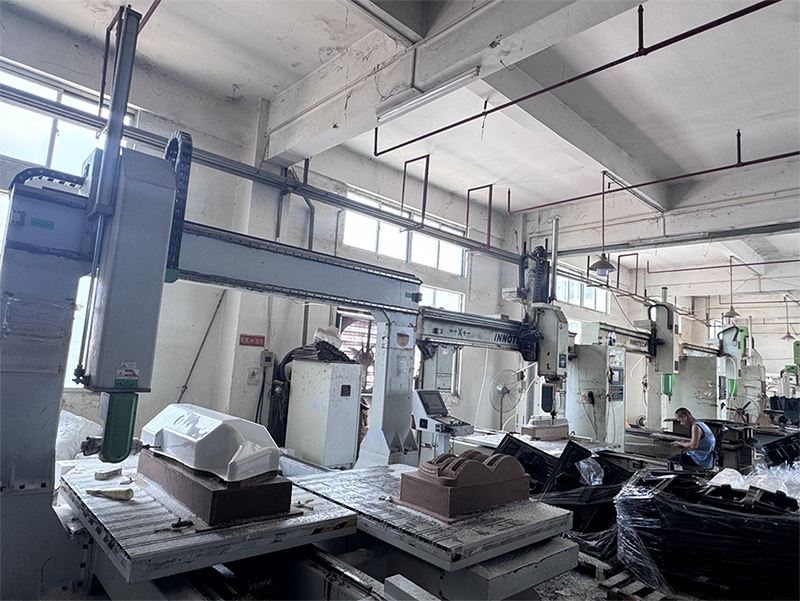
If possible, visit the factory in person, or request a full video factory tour. It is the fastest way to validate equipment, workflows and quality culture.
Final Takeaway
The best POP manufacturer is not always the cheapest one. Prioritise proven relevant experience, reliable lead times, transparent QC and clear communication. Shortlist 3–5 vendors and share identical drawing packages so you can compare quotes fairly.
Short FAQ
Q: Should I always choose the cheapest POP quote? A: No. Price is only one factor. Manufacturing capability, lead time, shipping cost and quality track record matter equally. Cheap bids from inexperienced suppliers often end up costing more due to delays and defects.
Q: Is Asian production suitable for silk-screened logo POP trays? A: It fits high-volume permanent POP programs only. For short-run promotional POP trays, regional manufacturing delivers faster lead times and better supply chain control.
Q: Can I get samples of silk-screened logo POP trays? A: Yes. Reference samples are available for quality evaluation. Custom prototypes with your artwork can also be made. A sampling fee applies and can be credited to your bulk production order. Sampling takes 5–10 working days after artwork approval; buyer covers courier freight.