leave a message
If you are interested in our products and want to know more details,please leave a message here,we will reply you as soon as we can.
In heavy gauge thermoforming, the difference between a part that works and a part that fails comes down to engineering decisions made before tooling — not after. A structured DFM review catches forming defects, material issues, and tooling problems early, saving thousands in mold modifications, material rework, and certification delays.
At RADIANT HONOR, every project begins with a free DFM review. Our engineering team evaluates your CAD files for:
Key insight: A $500 DFM review that catches a $5,000 mold modification pays for itself 10x. And our DFM review is free.
Request a Free DFM Review → — Reply within 1–3 business days.
We organize our technical content into four categories, covering everything you need to make informed decisions — from material selection to supplier evaluation.
Step-by-step buying guides for procurement teams. Learn how to prepare a complete RFQ, compare materials and processes, and evaluate suppliers — so you get accurate quotes and avoid cost surprises during production.
Key topics:
Browse All Procurement Guides →
Deep-dive technical content on thermoforming processes, material properties, and manufacturing techniques. If you need to understand draft angles, wall thickness distribution, or CNC trimming tolerances, these articles have the data.
Key topics:
Browse All Technical Articles →
Real projects, real results. Each case study documents the engineering challenge, our solution, and the measurable outcome — including cost savings, lead time reduction, and quality improvements.
Key topics:
Side-by-side analysis of thermoforming processes, materials, and certification requirements across key industries. Use these comparisons to make faster, data-driven decisions.
Key topics:
Browse All Industry Comparisons →
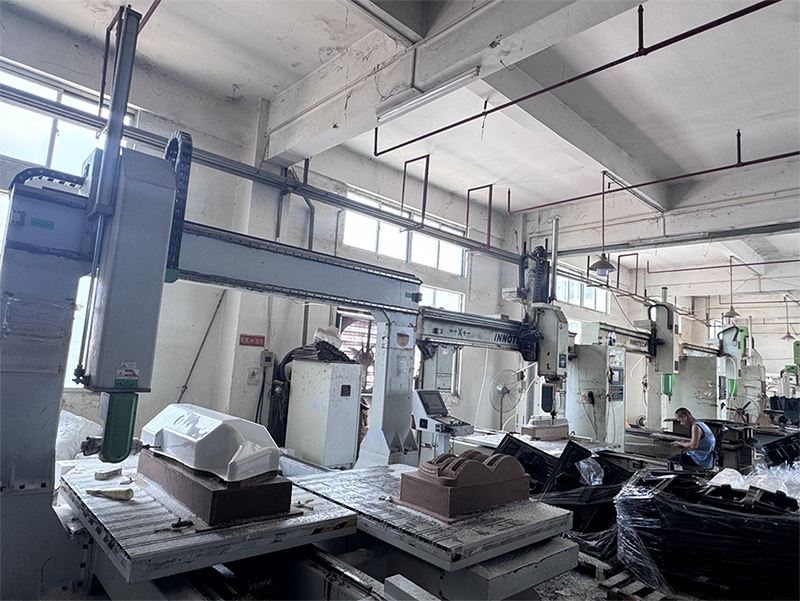
Our engineering team works alongside our production floor. Every DFM review is informed by real forming experience — not just software simulation.
Material Engineering
Tooling Engineering
Process Engineering
Quality Engineering
When you're comparing thermoforming suppliers, start with these numbers:
Pro tip: Use this table as your supplier comparison checklist. Any supplier who can't provide equivalent specs should explain why.
Step 1: Submit your files Upload your 3D CAD file (STEP, IGES, STP, or native format) and 2D drawing. Include material, volume, finish, and certification requirements if known.
Step 2: Engineering review (1–3 business days) Our engineering team analyzes your part for forming feasibility, material optimization, tooling approach, and potential risks.
Step 3: DFM report You receive a structured report covering:
Step 4: Approve and proceed Review the report, discuss modifications, and approve tooling. Or request a prototype for physical validation.
Step 5: Prototype (optional) For complex or high-risk parts, we recommend a prototype before committing to production tooling. Prototypes use soft tools or 3D-printed molds, delivering first articles in 1–3 weeks.
Is the DFM review free? Yes. Our basic DFM review is free for all quoted projects. We use it to develop accurate tooling and pricing estimates — you get the analysis at no cost. Comprehensive standalone DFM reports with detailed simulation may have a nominal charge.
How long does the DFM review take? Simple parts: 1–2 business days. Complex parts requiring forming simulation: 3–5 business days. You'll receive the report by email with a link to schedule a review call if needed.
What file formats do you accept? 3D CAD: STEP (.stp, .step), IGES (.igs), or native formats (SolidWorks, Creo, NX, CATIA). 2D drawings: PDF. If you only have a 2D drawing, send it anyway — we can work from it.
Do I need to modify my design based on DFM recommendations? Critical modifications (draft angles, corner radii, wall thickness) should be incorporated before tooling — they prevent real manufacturing problems. Recommended modifications (material changes, feature redesigns) are suggestions to optimize cost or quality, but the decision is yours.
Can you help with certification requirements? Yes. Our IATF 16949 certification covers automotive projects. We support REACH, RoHS, UL94, and FDA compliance documentation. If you need a specific certification, mention it in your RFQ so we can include it in the DFM analysis.
What if my part is not manufacturable? We'll tell you honestly. A good DFM review identifies feasibility issues early. When that happens, we recommend design modifications, alternative processes (injection molding, rotational molding), or part splitting — whichever gives you the best outcome.
Upload your CAD files for a free DFM review. We'll analyze your part, recommend the optimal material and tooling approach, and provide a clear quote with tooling cost, per-part pricing, and lead time.
What you get:
Or browse our resources first:
RADIANT HONOR CO., LIMITED — Heavy Gauge Thermoforming Experts
IATF 16949 Certified · Maximum forming size 5000 × 2500 × 1000mm · In-house sheet extrusion, tooling, CNC trimming, and assembly
Scan to Wechat :

Scan to WhatsApp :